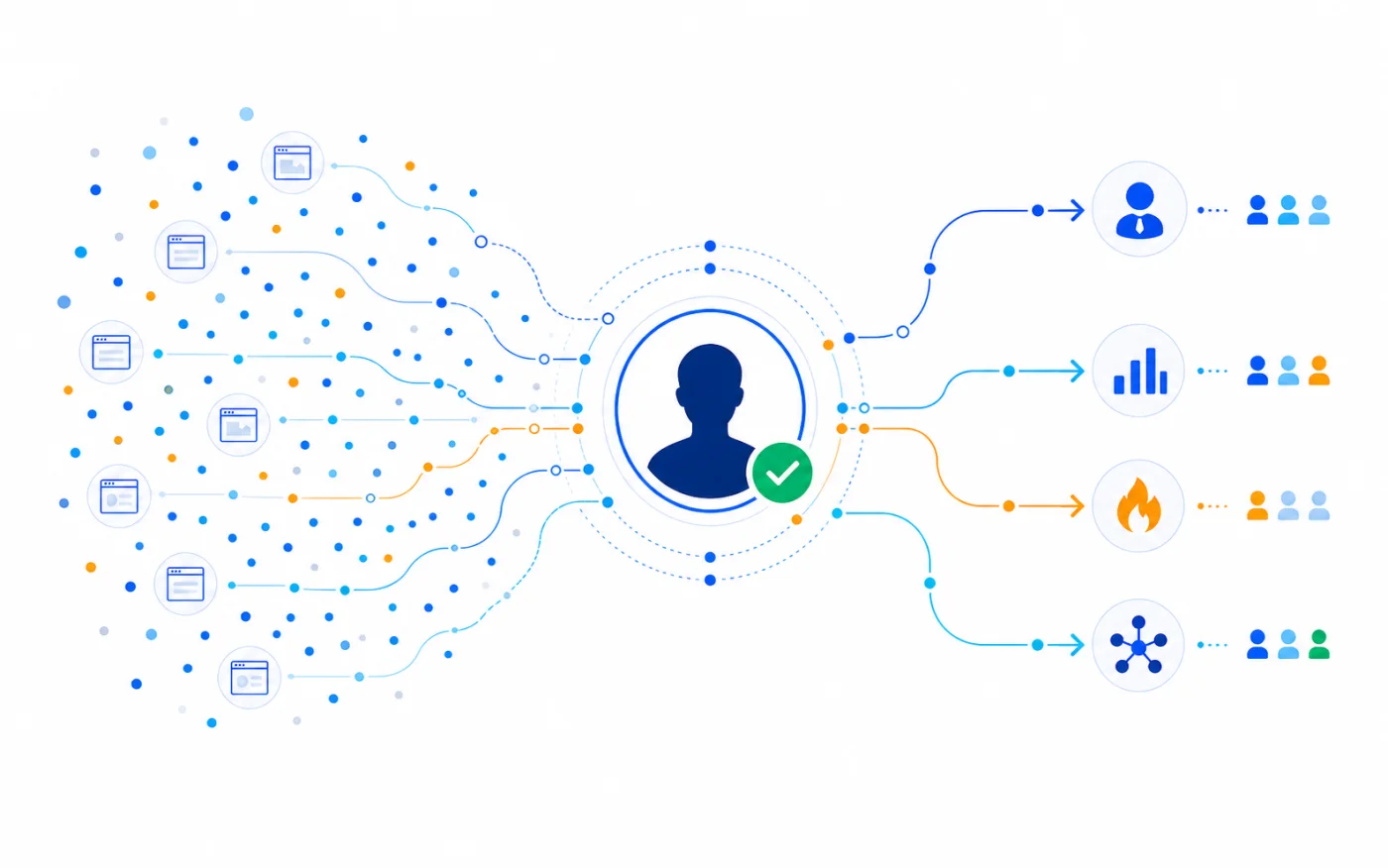
The identity gap is an operating problem
Most website analytics describe sessions, channels, and aggregate behavior. Those views are useful for optimization, but they do not tell a revenue team which person is showing interest or what action is appropriate. Forms solve that problem for a small, self-selected group. Everyone else remains a pattern.
Person-level identity resolution creates a bridge between behavioral data and an operational workflow. The goal is not to send every resolved name to sales. The goal is to recognize the subset of people whose fit, behavior, and timing justify a specific next step.
A five-stage operating model
1. Observe meaningful behavior
Begin with pages and events that indicate real evaluation: pricing, product detail, integrations, implementation, comparisons, and high-intent resources. Avoid treating a single homepage view as demand.
2. Resolve the person
Use approved identity signals to connect the session to a persistent profile. Apply consent and suppression requirements before the profile becomes eligible for activation.
3. Enrich for context
A name alone is not enough. Add company, role, firmographic fit, viewed topics, recency, and frequency. This context helps a person decide whether the signal belongs in sales, nurture, media, or no action at all.
4. Score for relevance
Use a simple model first. Combine fit, engagement depth, and recency. A transparent score with clear reasons is more useful than a complex black box your team cannot trust.
5. Route one clear action
Send the minimum useful package to the system of action: identity, why the person matters, what they researched, and the recommended next step.
Build routing rules people will follow
Separate your audience into a small number of operational tiers. A high-fit visitor with repeated product and pricing activity may create a CRM task. A high-fit visitor with early educational activity may enter a topic-specific nurture. A weak-fit visitor may remain in analytics only.
- Sales-ready: strong fit, repeated high-intent behavior, recent activity.
- Nurture-ready: strong fit, meaningful but early-stage research.
- Audience-ready: clear topic interest suited to coordinated media or lifecycle messaging.
- Observe only: insufficient fit, intent, consent, or context.
Every route should have an owner, a service expectation, and a suppression rule. This prevents duplicate outreach and makes the system easier to audit.
Measure signal quality before volume
The first question is not how many people were resolved. Ask whether the resolved profiles are accurate, relevant, accepted by the destination team, acted on promptly, and associated with downstream progression.
Track resolution quality, eligible audience rate, routing acceptance, time to action, and progression through the intended journey. Review rejected signals as carefully as accepted ones; they reveal where your fit and intent rules need refinement.